
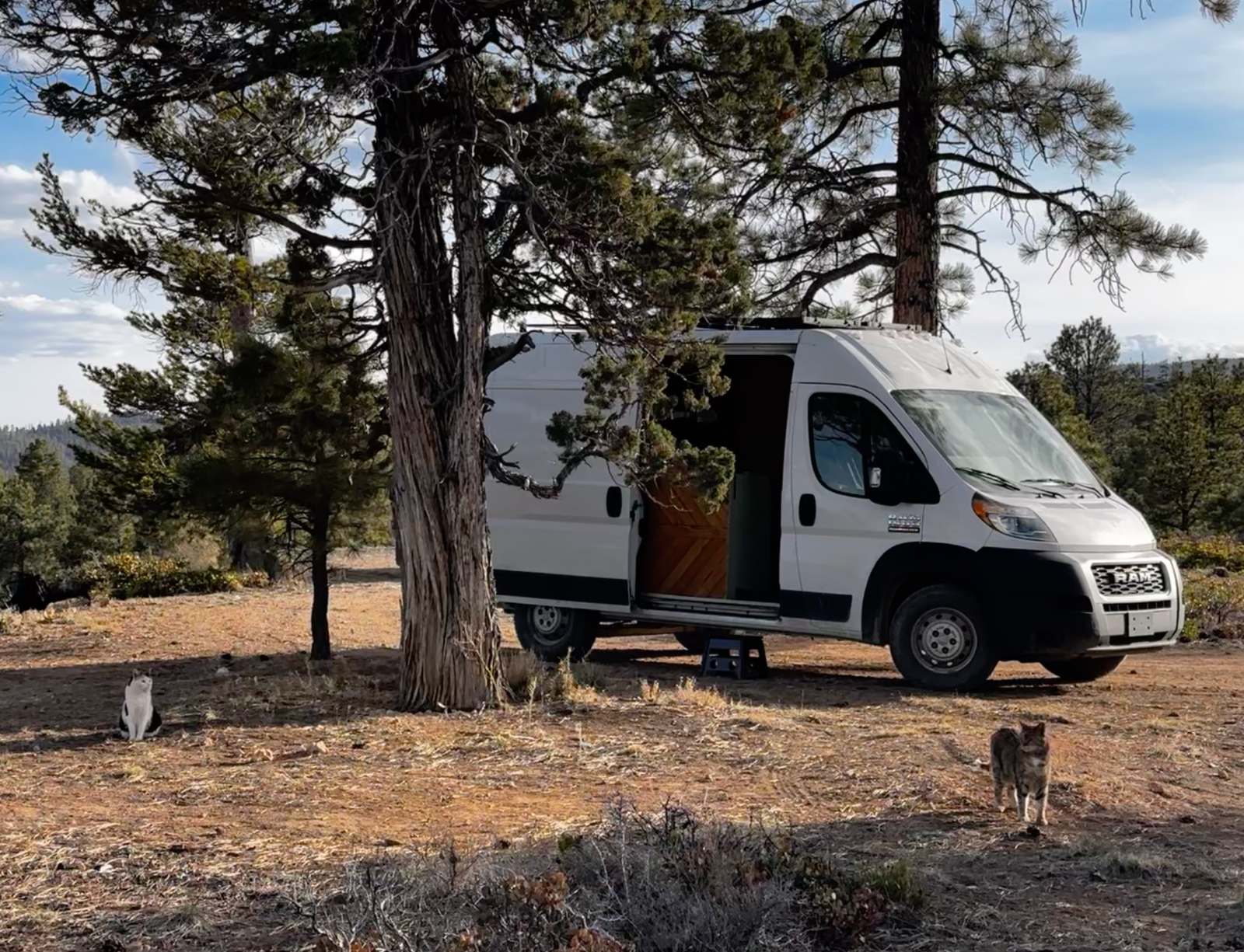
When you live in a van, the direction in which you park greatly affects the temperature of your vehicle throughout the day. Point it one way and you wake up to a sunbeam warming the floor. Point it the other way and you spend the afternoon hiding from a windshield that has turned your living room into a toaster oven.
I live full-time in a van with two cats, and I keep my sliding door open almost all day so they can come and go. No diesel heater when the door is open, no house air conditioning at all. I use the sun as my heater, and the shade as my AC. Parking direction is how I control both.
Quick Answers to How I Park to Control Temps in the Van
- Hot weather: point your sliding door north, or a little northeast, and cover the windows that still catch sun. I have DIY reflectix window covers that have worked well for 3+ years now! They have one magnet on the corner to keep them stuck to the doors.
- Cold mornings: face your windshield or sliding door toward the sunrise and let the sun heat the van for free.
- Evenings in summer: You can point your sliding door completely north, but watch out for the setting sun in the west. If your sliding door is north instead of north east, you won’t have any shade to hang out in the afternoon/evening.
- Roof solar or Starlink: park in the open, but look for shade around the van, not over it.
- No roof panels: you get the luxury of parking under a shady tree. Enjoy it.
These rules work for vans, truck campers, trailers, and anything else with windows and a door. The details change with the season, which is where most of us get it wrong.
Windows and Doors Are Where the Heat Gets In
Walls can be insulated. Glass can’t, at least not much. Your windshield, side windows, and an open sliding door are the big openings where sunlight pours straight into your living space.
The U.S. Department of Energy’s guidance for homes applies neatly to a van. North-facing windows let in natural light with less summer heat, south-facing windows gather the most sun in winter, and east- and west-facing windows let in excess heat and glare.
The sun shining through the windows and the sliding door is the single biggest cause of overheating.
Which Way to Park Your Van in Summer to Stay Cool
- Point the sliding door north. In the Northern Hemisphere, the midday sun sits in the southern sky, so the north side of the van stays shadiest through the hottest hours.
- Even better, angle it northeast (this is what I prefer). A door facing a little northeast is guaranteed to be in shade in the evening, which is exactly when you want to sit outside. Having no shade at your door when you want to hang out is the worst.
- Put up window covers on anything still getting sun. I use DIY Reflectix covers cut to fit each window, and they make a yuge difference.
- Find shade around the van, not over it. Trees or a ridge to the west can block the late afternoon sun without shading your roof.
- Guard against the west. Late afternoon sun comes in low and hot, and I most often got wrong before I dialed this in.
The sun doesn’t rise due east and set due west. NASA points out that sunrise swings furthest north of east at the June solstice and furthest south of east at the December solstice. So in midsummer, even a north-facing door can catch a low beam of sun right after sunrise and again before sunset. The days are longer too, which makes the sun much harder to avoid.
Which Way to Park Your Van in Winter for Free Solar Heat
Winter changes everything. The sun moves low across the southern sky, which is great news if you want it inside.
- On really cold days, face the windshield east. If I know I won’t open the door until afternoon, I want as much morning sun through that big windshield as possible. It’s a free solar heater!
- On brisk mornings, aim the sliding door toward the morning sun. I like sun pouring through my open door until about 10am, then easing off as the day warms up.
- Close the covers at night. Glass that lets heat in during the day lets it right back out after dark.
Boudica and Pooka vote for this setup with their feet. On cold mornings they head straight for the dash and lie in the sunshine like two little solar panels.
Shade vs. Solar: Can You Park Under a Tree?
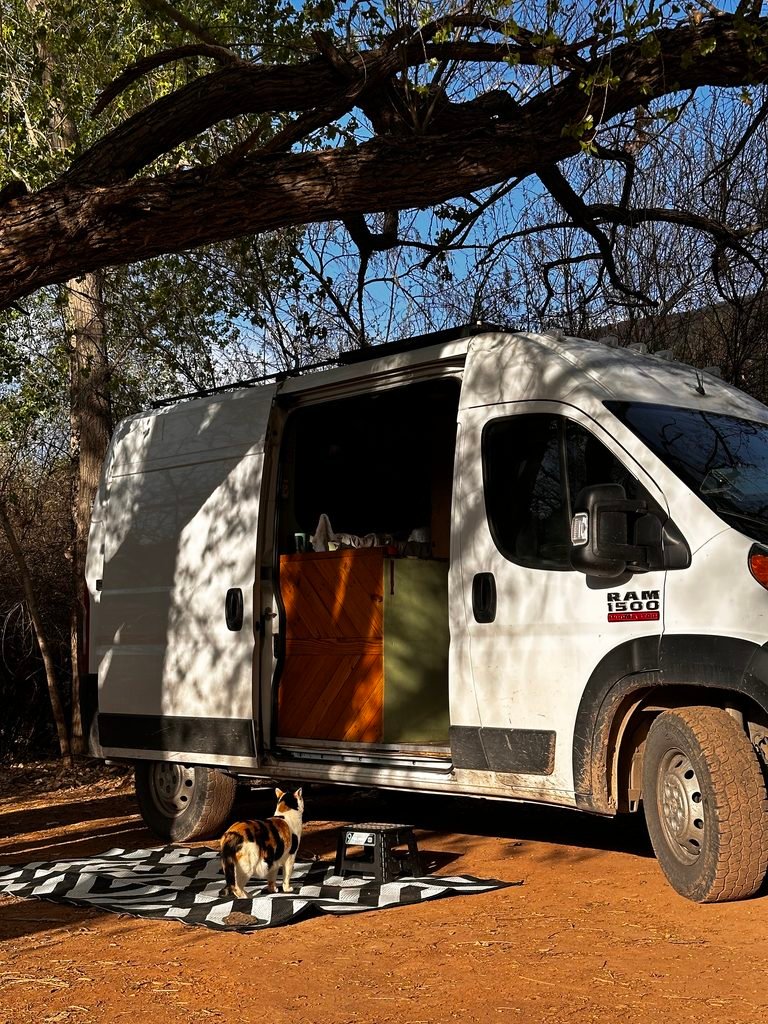
If you have solar panels on your roof or a Starlink dish, shade overhead costs you power and internet. I always choose to park out in the open for both. I’d love to tuck under a big shady tree on a hot day, but my batteries and my workday come first.
- Roof panels or Starlink: park in the open and use direction and window covers for comfort. My internet setup post has more on picking a site for open sky.
- Portable panels only: park the van in the shade and set the panel out in the sun. You get both.
- No solar at all: shade is your best friend. Take the tree.
Do You Need an Awning?
Awnings are the classic answer to summer sun, and lots of people love them, but they didn’t work for me. When I need shade the most, it’s often because I’m in the desert, you know, the windiest possible place. I got tired of babysitting an awning or canopy so it wouldn’t blow away. In fact, one of my canopies did blow away and break in Death Valley.
If you camp somewhere calm, an awning on the sunny side can be great. If you’re often in the wind like me, parking direction and window covers do the job with nothing to chase across the desert.
How to Find the Right Direction Without Moving the Van a Bunch
Understanding the rules is one thing. Getting the angle right at a real campsite is another.
For years I used my phone’s compass, and it was tough to get exactly right. It turned into trial and error: park, wait, realize the sun is blasting straight into the door the next day, move the van, try again tomorrow. Half the time I didn’t bother moving it and just suffered through too much sun or that blinding evening glare.
A few things help if you’re doing it by compass:
- Take your compass reading outside the van. Phone compasses can get jumpy inside a big metal box.
- Think about the season, not just “east” and “west.” Sunrise and sunset shift a lot between June and December.
- Check the time of day you care about most. A spot that’s perfect at noon can be miserable at 5pm.
This problem bugged me enough that I built an app for it.
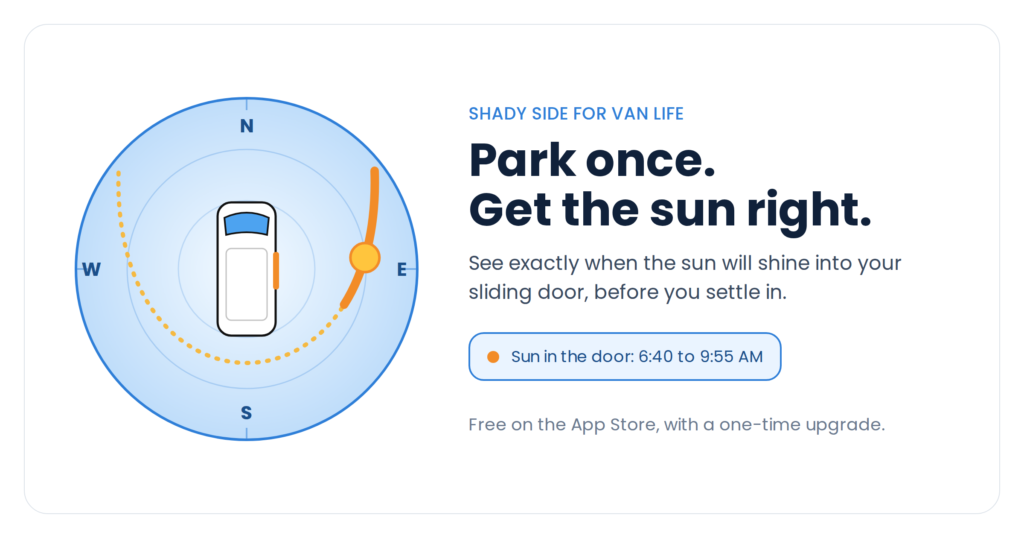
Shady Side for Van Life shows you exactly when the sun will shine into your sliding door, based on which way your van is facing. It uses my real van’s dimensions and door size, your location, and where the sun sits in the sky for the season, so it’s accurate down to the time of day.
I use it to get sun in my door until about 10am on brisk mornings, then shade the rest of the day. It’s free with a one-time upgrade that adds planning ahead and aiming portable solar panels.
Parking for Your Adventure Cats
If you travel with cats, parking direction is also about their comfort.
- Give them a sunbeam on cold days. A sunny dash or a patch of floor by the door keeps adventure cats warm and happy.
- Watch their nap spots. Sometimes the sun lands right on a sleeping cat and wakes her up. I put up a window cover and everyone goes back to sleep.
- Take summer heat seriously. A van in the sun heats up fast, and cats hide discomfort well. Read up on how to tell if your adventure cat is overheating before the hot season.
Which Way to Park Your Van: Quick Checklist
- Summer: sliding door north or northeast, window covers up, shade around the van but not over the roof.
- Winter: windshield or door toward the morning sun, covers closed at night.
- Evenings: block the low western sun before it bakes the van.
- Roof solar or Starlink: open sky wins. Portable panels let you park in the shade.
- Windy sites: skip the awning and lean on parking direction.
- Remember the seasons: the sun rises north of east in summer and south of east in winter.
- Check the angle before you settle in, with a compass or Shady Side, so you only park once.
Getting this right changed my days more than almost any gear I own. Warm mornings with the door open, cool afternoons without a fan running nonstop, and two cats asleep in a sunbeam. All from pointing the van the right way.
Sources
- U.S. Department of Energy: Energy 101: Daylighting
- NASA Astronomy Picture of the Day: Solstice: Sunrises Around the Year
Leave a Reply