
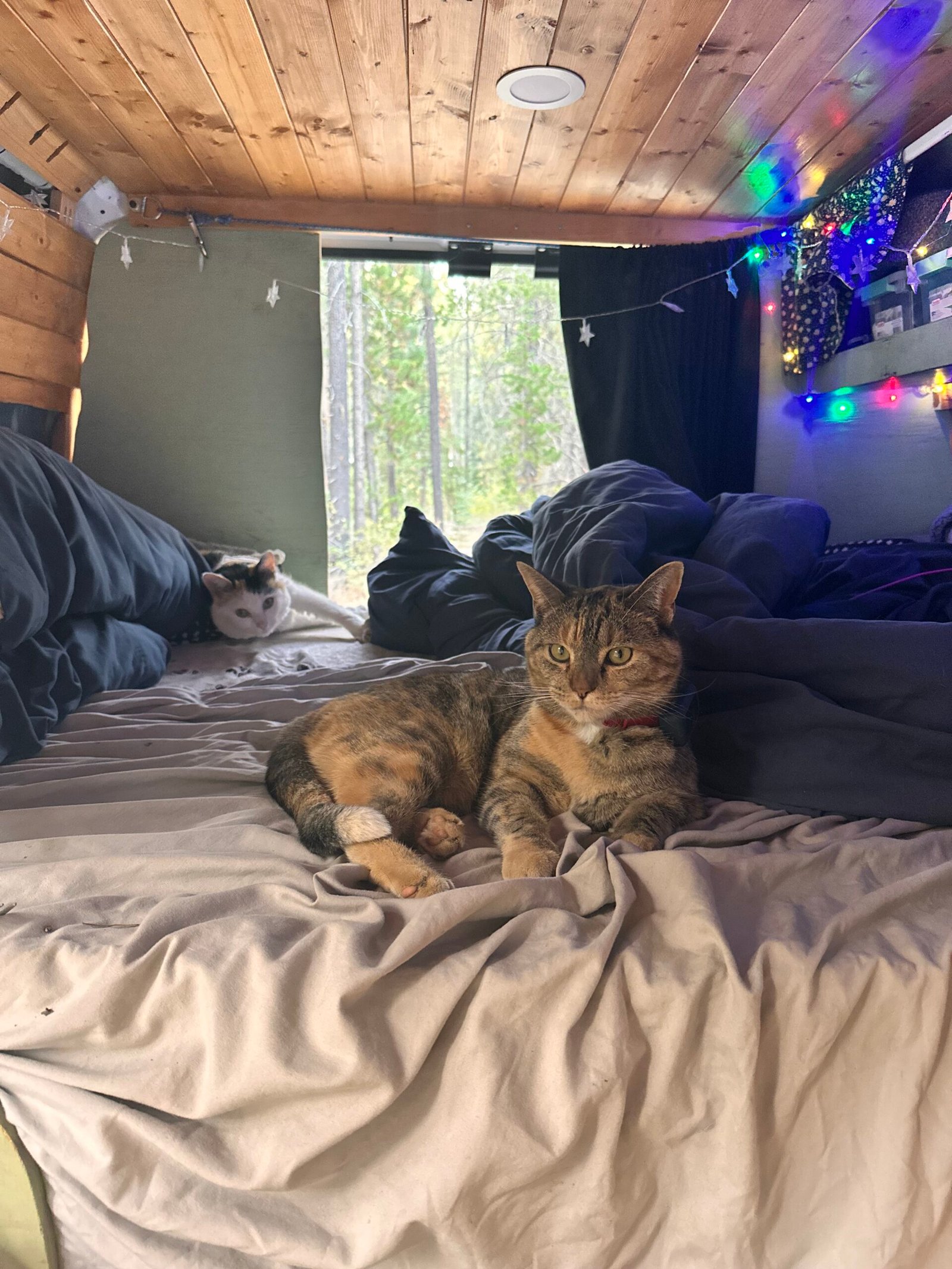
When I told people I was moving into a van with my two indoor cats, Boudica and Pooka, I kept hearing the same warning: “Dogs love their people, cats love their home.”
It turned out not to be true for my cats.
Three years in, I can tell you my cats love me. I’m their home, and the van is just what carries us around. But I believed those warnings enough to be really anxious about it. So if you’re sitting at home right now, looking at your cat and wondering if you’re about to ruin her life, I understand. I was right there. This is everything that helped my cats become happy little adventure cats, including the parts that didn’t go well.
Do Cats Like Van Life?
Mine have been living it for three years, and in my experience the “cats are territorial” idea gets overstated. Cats bond with their people, not just their surroundings. When we pulled into our first real campsite, an empty one in Missouri, Boudica stayed close to the van while Pooka ran around, wild and free. Then I wandered toward a pond to give myself a minute, and when I looked back, both cats were following me down the path.
They’ve followed me ever since.
Your cat’s sense of territory can grow to include you. When I’m in my camp chair, Boudica climbs into my lap. When I walk, they walk. The van became their safe space almost right away, and so did I. They’re so affectionate about it, and it melts me every time.
So yes, cats can handle van life. But there was a year of groundwork behind that moment in Missouri.
Start Leash Training Months Before the Van
Long before I moved into the van, I put Boudica and Pooka in harnesses and walked them around my yard for about an hour a day. They loved it. Boudica loved it so much she’d pick her harness up in her mouth like a little dog, carry it to the door, and meow at me until we went out.
That yard time is what everything else is built on. My cats learned that going outside is something we do together, and I think that’s why they stay close at campsites today, even off-leash. I wrote a whole post about how leash training keeps a cat from running away on the road, so I won’t repeat it all here. Start early, keep it fun, and try not to let your cat see you get frustrated, or she may decide the harness is the problem.
And if you love being outdoors, share that with your cat while you still have a yard to practice in. I wasn’t a great fit for house life either. Part of why this worked is that all three of us wanted the same kind of life.
Let Them Explore the Parked Van (with Treats)
Before we moved in, I’d toss treats into the van so Pooka would slowly make her way inside and poke around while it was parked. No engine, no pressure, just snacks in a weird new room.
This lines up with expert advice. International Cat Care recommends helping your cat get comfortable with the carrier or vehicle well before the journey, feeding treats inside it, and adding familiar-smelling bedding so it feels like a pleasant place rather than a trap. That’s what the treat game was doing, even though at the time I was just winging it.
So park the van, open the door, and let your cat treat it like a clubhouse for a few weeks. It’s cheap, it’s easy, and it helps.
Should You Do Practice Trips First? For Us, Not Really
I did what seemed responsible and took the cats on a couple of test runs to a friend’s house before we left. It didn’t go well. They were scared, and the trips were too short for the fear to wear off. Pooka especially came away afraid of the van. I felt terrible, I didn’t know how to fix it, and I was already selling my house. There was no plan B.
So we just went. And a week or two into real, full-time road life, they adjusted beautifully.
Looking back, a day trip or a weekend was all scary middle and no reward. The cats never stayed long enough to learn that the van always parks somewhere lovely and things settle down. Living on the road full time gave them time to learn the rhythm: drive, arrive, explore, dinner, bed. The routine is what they came to trust, and short trips weren’t long enough to build one.
I’m not saying you should skip test runs. Every cat is different, and if yours takes to them, that’s wonderful. But if your practice trips go badly, please don’t take it as proof your cat can’t do this. Mine struggled with the practice runs and did great with the real thing.
Motion Sickness, Distress Meows, and the First Rough Week
The first week wasn’t easy.
Pooka threw up in her carrier. More than once. It earned her the nickname “Puka,” which has stuck with her ever since. There were distress meows too, especially on bumpy dirt roads. If I could give my past self one tip, it would be this one from International Cat Care: withhold food for about four to five hours before you drive, while keeping water available. A mostly empty stomach means less to clean up and less misery for your cat. They also suggest pheromone sprays for the bedding, and talking to your vet if your cat is an anxious traveler. That’s worth doing before you leave, rather than from a gas station in Kansas.
And then, after a week or two of drives, it just… stopped. The throwing up, the crying, all of it. Driving became boring, which is exactly what you want.
Where Should Cats Ride in a Van?
They started out in carriers, which is the standard advice and the safest option. After a while I started letting mine out, and they each picked their own seat:
- Boudica rides in a little towel bed I made for her under the driver’s seat. Sometimes she sits calmly in my lap instead.
- Pooka is the passenger princess. Passenger seat, sitting up, watching the world go by.
They settled into those spots years ago, and they don’t move around while I drive. A secured carrier is still the officially recommended choice, and a young, bouncy cat really does need one. Mine are calm older ladies who treat a moving van as a chance to nap.
You Don’t Need to Start With a Kitten
People often picture adventure cats as kittens raised on trails, so if you’re choosing a cat for road life, starting with a baby can feel like the natural choice. I’d gently suggest considering an older cat. Kittens have their own challenges; they just tend to get picked because they’re young and easy to shape.
A kitten in 60 square feet can mean:
- Chaos while you’re driving. Kittens bounce off everything. Mine don’t, because they’re grown.
- A personality you haven’t met yet. You won’t know who you’re training until she’s already living in your van.
- Years of “everything is a toy,” including your cords, your blinds, and your one houseplant.
Boudica and Pooka started van life at 6 and 3, and they’re 9 and 6 now. Their maturity has been a gift. They keep their routines and their favorite spots, they nap through long drives, and I knew who they were before I ever turned the key. If you’re adopting a cat with road life in mind, the sweet older cats at the shelter are worth a look.
What the First Weeks Look Like
Once we were really out there, things settled like this: the van became home base quickly, the cats started following me around camp, and somewhere in those first weeks we started the evening ritual we still follow.
At quiet campsites with little paths, I take them on a short evening walk, maybe half a mile to a mile, and they follow me there and back like it’s the most natural thing in the world. Then treats, and then I tuck them in for the night. That ritual, along with our sunset dinner routine and a litter box setup that works in a vehicle, is really the backbone of our life. Cats love routine, and once they have a good one, they’ll happily remind you of it.
And if you’re heading out in summer, please read up on how to tell if your adventure cat is overheating before you go. That one is important.
What If Your Cat Hates It?
If this is weekend camping and your cat hates it: it’s okay to let her stay home with a sitter. Don’t force it. A cat who keeps getting taken on scary trips may never come around, and she doesn’t have to. Camping is your hobby, not hers.
If you’re going full time: this part still makes my chest tight. When I was getting ready to leave, people in my life suggested I rehome my cats, and I was honestly torn. Now I watch Pooka trotting down a trail at golden hour and I’m so glad I gave it a real chance. For my cats, being given up would have been much harder than learning to adapt. They didn’t need a house. They needed me, an open door, and a good dinner routine.
If you can, give it a real chance, with enough time for your cat to settle in. My scared, carsick, crying cats became the happiest little adventure cats I know, and a day trip never would have shown me that.
Preparing Your Cat for Van Life: Quick Checklist
- Leash train in the yard for months before you leave. Keep it fun and patient.
- Make the parked van a clubhouse. Treats inside, door open, no pressure.
- Skip food for four to five hours before driving, especially if your cat gets carsick. Keep water available.
- Start with carriers, familiar bedding inside; let calm cats earn their spots later.
- Expect a rough first week or two. Carsickness and crying are part of adjusting, not a sign it won’t work.
- Consider an older cat if you’re choosing a companion for the road; a mellow adult cat has real advantages.
- Start rituals right away. Evening walk, sunset dinner, tuck-in. For a cat, routine is a big part of what home means.
- Talk to your vet before launch if your cat is an anxious traveler.
The people who told me cats belong in houses meant well. They just never saw Boudica carry her own leash to the door, or had two little shadows follow them down a path to look at a pond. Your cat might surprise you too.
Sources
- International Cat Care: Travelling with your cat
Leave a Reply